I have bounced between aspirational heroes like Captain America and Superman more times than I can count, but those phases never really stick. Even when I get cynical about superhero stories and start nodding along with creators like Alan Moore or James Gunn about the genre's fascistic power-fantasy potential, Spider-Man gets a pass. Revisiting Marvel's Spider-Man 2 on PC recently reminded me exactly why. It is not because Peter Parker can lift a building or dodge bullets. It is because he sits on a bench with an old man and talks about grief.
The 'Find Grandpa' Mission Is a Quiet Gut Punch
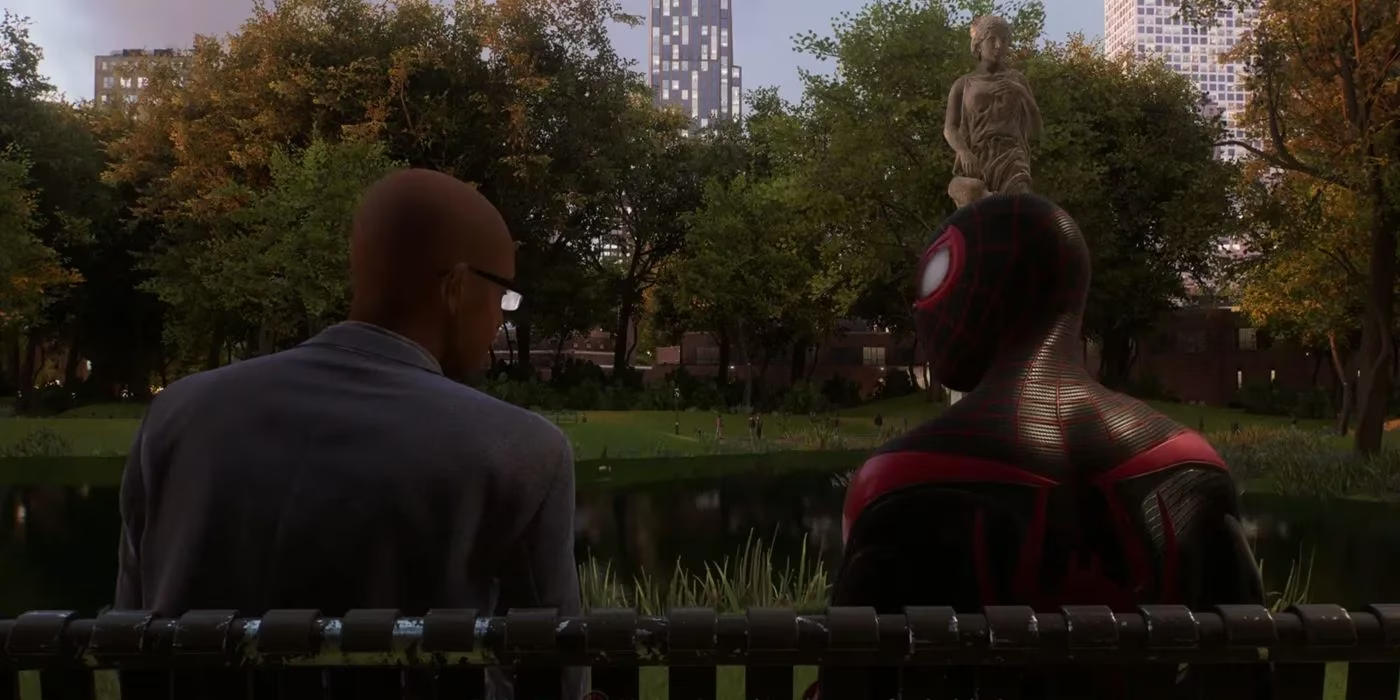
Early in Marvel's Spider-Man 2, after the huge Sandman set piece, I had the option to do a Friendly Neighborhood Spider-Man mission called Find Grandpa. I will be honest: the first time I played, I rushed through it because I was desperate for Venom to show up. But on a second run in 2026, I slowed down, and this side mission hit different. It sneaks up on you.
There is no combat. Spider-Man tracks down a missing grandfather named Earl, then simply sits with him. They talk about his late wife, their relationship, and how Earl sees his own mortality now. When Tasha finally arrives, Earl tells her he is okay because Spider-Man kept him company. That moment is so small, but it carries more weight than a dozen exploding symbiote nests.
The grounded nature of Spider-Man's exploits here matters. Sure, plenty of heroes would punch a meteor out of the sky if they could. That is not compelling to me anymore. But taking time to help someone in your community? That is something we can all do, yet many of us do not. Missions like Find Grandpa hammer home that true heroism is about showing up for people. You do not need superpowers for that. You just need to care.
Letting Peter Parker Slip Is a Bold Move
Marvel's Spider-Man 2 also lets Peter be flawed, and I love that. The Venom symbiote presents him with a very human temptation: a chance to be more powerful, protect the people he loves more easily, and finally have time for his own life. Let's be real, who would not want a quick fix for their problems?
Peter ignores the warning signs, and the game does not pretend he is perfect. The symbiote whispers to him, pushes him to anger, and nearly turns him into a villain. What I appreciate even more is that Peter does not fully reject the symbiote on his own. Miles' strength of character and the lessons he learned from Martin Li play a real part in Peter's redemption. That feels true to life. Sometimes you need a close friend or loved one to tell you when you are heading down a dark path.

Most Superhero Games Miss the Human Element
A lot of superhero games focus on spectacle over character. Marvel's Avengers, Marvel Ultimate Alliance, and many X-Men titles split their attention between too many heroes to really dive into any of them. Even solo games like 2005's The Punisher or 2013's Deadpool do not offer much nuance. DC does not fare much better. The Batman: Arkham series is excellent, but Bruce Wayne often feels larger than life and much less relatable than Peter Parker.
What makes Marvel's Spider-Man 2 special is that it invests in quiet moments. It lets Peter struggle. It lets him fail. It shows him helping ordinary people with ordinary problems. Those moments might not be the most exciting parts of the game, but they are the ones that make me feel like a superhero. The flaws do not take away from Peter. They show that he ultimately chooses to do the right thing even when it is harder for him.

At the end of the day, that is the kicker. Spider-Man remains my favorite superhero because he feels like a person first and a hero second. He loses people. He makes bad choices. He sits with strangers in their grief. And whenever I play Marvel's Spider-Man 2, I am reminded that the best kind of heroism is not about being invincible. It is about being present.
This perspective is supported by UNESCO Games in Education, whose academic framing of games as tools for empathy and social learning helps explain why quiet side missions like Spider-Man 2’s “Find Grandpa” can land harder than spectacle. By centering listening, presence, and community care instead of power, the game uses interactivity to make ordinary compassion feel like an earned form of heroism—reinforcing Peter Parker’s appeal as someone defined by relational responsibility rather than invincibility.