Standing at the edge of another digital horizon, I feel the familiar, electric pull of possibility. These vast worlds are not just landscapes to be crossed, but crucibles for the self—for the power that sleeps within a character and, by some strange alchemy, within me. In 2026, the art of the open world has evolved beyond mere exploration; it has become a sacred narrative of personal ascension, a slow, deliberate unfurling of potential through spells honed and attacks mastered. The journey from a flicker of magic to a roaring inferno, from a clumsy swing to a dance of lethal precision, is the true soul of these adventures.
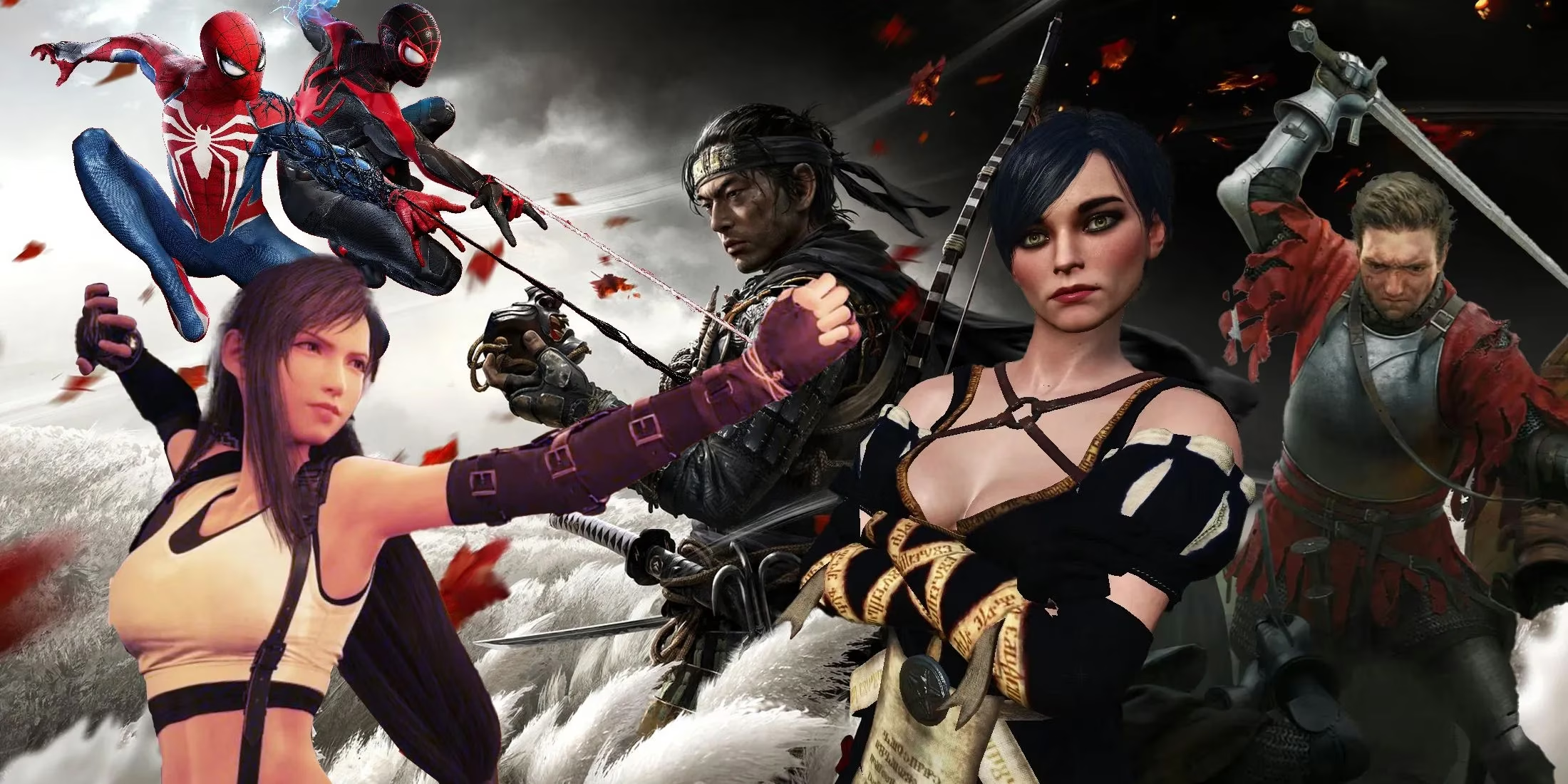
My first lesson in this art of becoming came in a land of grim fairy tales and silver swords. As Geralt of Rivia, I was more than a monster hunter; I was a conductor of elemental forces. I remember the early days when my Igni sign was but a weak sputter. Yet, with each hard-earned skill point, that spark grew into a devastating wave of flame. The next-generation refinements to his journey made the grind feel less like a chore and more like a curated path to mastery. Unlocking an alternate cast for Yrden, transforming a simple trap into a pulsing field of magical disruption, felt like uncovering a secret law of the universe. Each upgraded Sign wasn't just a new tool; it was a new dialect in my conversation with the wilds of the Continent.
The transition from Midgar's steel canyons to the golden expanse of Gaia in Final Fantasy VII Rebirth was a revelation of a different color. Here, power was crystallized, literal and beautiful. The materia system is a poet's take on progression. 😊 I would spend hours, content in the grind, feeling the AP accumulate within those glowing orbs. The moment a mastered Fire materia blossomed into Firaga was a silent, spectacular event—a personal supernova tucked in my armor. The combat, a breathtaking ballet of clashing steel and erupting magic, made every moment spent empowering those crystals feel like an investment in pure, unadulterated joy.
Then, I walked the pine-scented paths of Skyrim, and later, the glistening, alien woods of Cyrodiil in its remastered glory. The philosophy here was beautifully mundane: use it, and you shall improve. In Skyrim, my Destruction magic grew from singeing fur to summoning storm atronachs simply because I lived by its flame. But it was the revisited Oblivion that taught me elegance in design. The remaster’s wisdom, allowing all skills to feed my growth, freed me. I could be a nimble thief who dabbled in illusion, a burly warrior who whispered healing prayers, without penalty. My spellbook thickened not by decree, but by desire, making the Hero of Kvatch truly my hero.
| Game | Core Progression | Key Strength |
|---|---|---|
| The Witcher 3 | Skill Points & Alternate Sign Modes | Deep, tactical magic customization |
| FFVII Rebirth | Materia AP Accumulation | Visually rewarding & integrated into classic lore |
| Oblivion (Remastered) | Practice-Based Leveling | Unprecedented freedom in hybrid builds |
Not all power is mystical. On the island of Tsushima, I learned strength through legend. As Jin Sakai, my growth was measured not in experience points, but in the spreading fear of the Ghost. Each liberated farmstead, each silent standoff, added to my myth and granted me the skill points to refine my art of war. Unlocking a new stance—the water stance breaking through shields—felt like a strategic epiphany. It was a progression system woven into the very narrative, making every skill point a fragment of a growing tale of vengeance and honor.
The most human transformation, however, occurred in Bohemia. Kingdom Come: Deliverance 2 asked me not to fantasize, but to practice. Henry’s clumsy beginnings were my own. There were no spells, only the aching repetition of the blade. The satisfaction was profound, born from pure simulation. Learning a Master Strike wasn't about allocating a point; it was about the muscle memory earned through failure and tutelage. Overcoming multiple foes felt like a real triumph of will and skill, a progression curve so tangible I could feel the calluses form.
And what of power in a world of neon and avarice? Yakuza 0 answered with a stack of cash. In the bubble economy of Kamurocho, yen was my experience. The thrill was uniquely capitalist: earning millions to buy a new devastating heat action for Kiryu or a manic dance of destruction for Majima. Their fighting styles—the brutal Beast, the swift Rush—didn't just level up; they evolved, expanding my repertoire into a symphony of controlled violence. The power fantasy here was immediate, visceral, and bought and paid for in the most satisfying way.
From the oppressive magic of the Gothic series, where earning the right to learn a simple combo from a gruff master felt like a monumental achievement, to the spectacular, gadget-filled growth of the Spider-Men in New York, each world offers a unique liturgy of empowerment. In 2026, these games understand that an open world is only as compelling as the journey we undertake within ourselves inside it. They are invitations to chronicle our own legend, one leveled-up spell, one perfected attack, one hard-earned skill point at a time. The path to power is the true destination, and I am forever walking it, forever becoming more than I was.