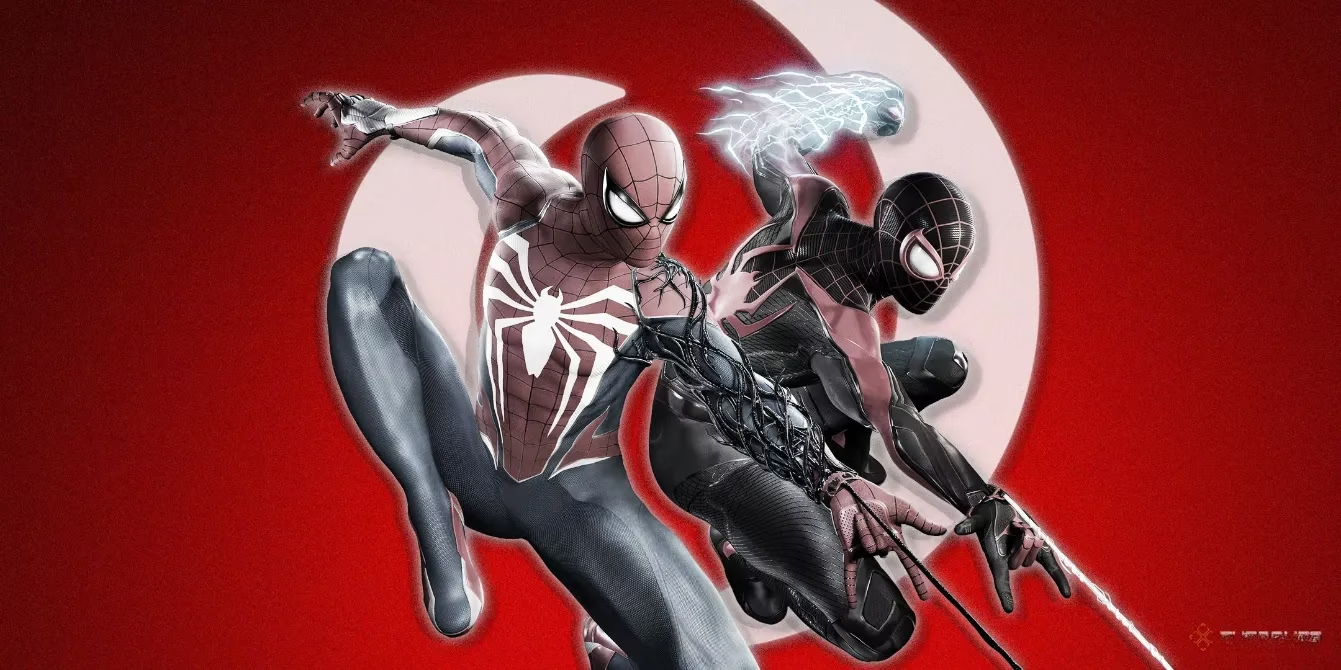
As I sit here in 2026, the controller in my hand feels heavier than usual. I've just spent another evening swinging through the familiar, yet increasingly sterile, digital streets of Insomniac's Manhattan. The feeling is undeniable—a profound sense of fatigue mixed with a deep-seated love for the character. I adore Spider-Man. The thrill of web-slinging, the acrobatic combat, the responsibility that comes with great power—it's a fantasy that has captivated me since I was a child. I cherished the 2018 masterpiece that redefined superhero gaming, and I was genuinely moved by the heartfelt, focused story of 2020's Miles Morales. But 2023's Spider-Man 2? It left me feeling... empty. It was a competent experience, one I finished upon release, but its impact evaporated faster than a symbiote in the sun. Attempting a replay recently only solidified this; the magic was gone, and I found myself booting up the remastered original instead. The core loop of 'swing and stop crime' in Manhattan, once so exhilarating, has begun to feel like a creative constraint, a curse of repetition that even a beloved studio can struggle to overcome.
The Curse of Familiarity and the Case for a New Vision
This isn't about dismissing Insomniac's incredible work. They built a phenomenal foundation. But the trajectory is clear: from a groundbreaking origin, to a brilliant, condensed spin-off, to a sequel that felt like it was checking boxes for a 'full-length' experience rather than forging a new path. The setup for Spider-Man 3 is there, but my spider-sense is tingling with apprehension. I genuinely believe it's time for the webhead to swing into the capable hands of a different creative team. We don't need another origin retelling or a slight graphical upgrade on the same map. We need a paradigm shift. Think back to 2005's Ultimate Spider-Man. That game felt like a bolt of lightning because it dared to be different. It embraced the stylized, cel-shaded aesthetic of the comics, prioritized a unique narrative and combat feel, and didn't treat web-swinging as the sole sacred pillar. It was a breath of fresh air, proving that Spider-Man's essence can thrive outside a hyper-realistic, open-world Manhattan template.
Blueprints for a Brave New Web: What Could Be Next?
So, if we're dreaming of a title that's more than just another traversal-heavy sandbox, what forms could this new Spider-Man adventure take? The possibilities in 2026 are more exciting than ever.
1. The Life of Peter Parker: A Narrative-Driven Experience
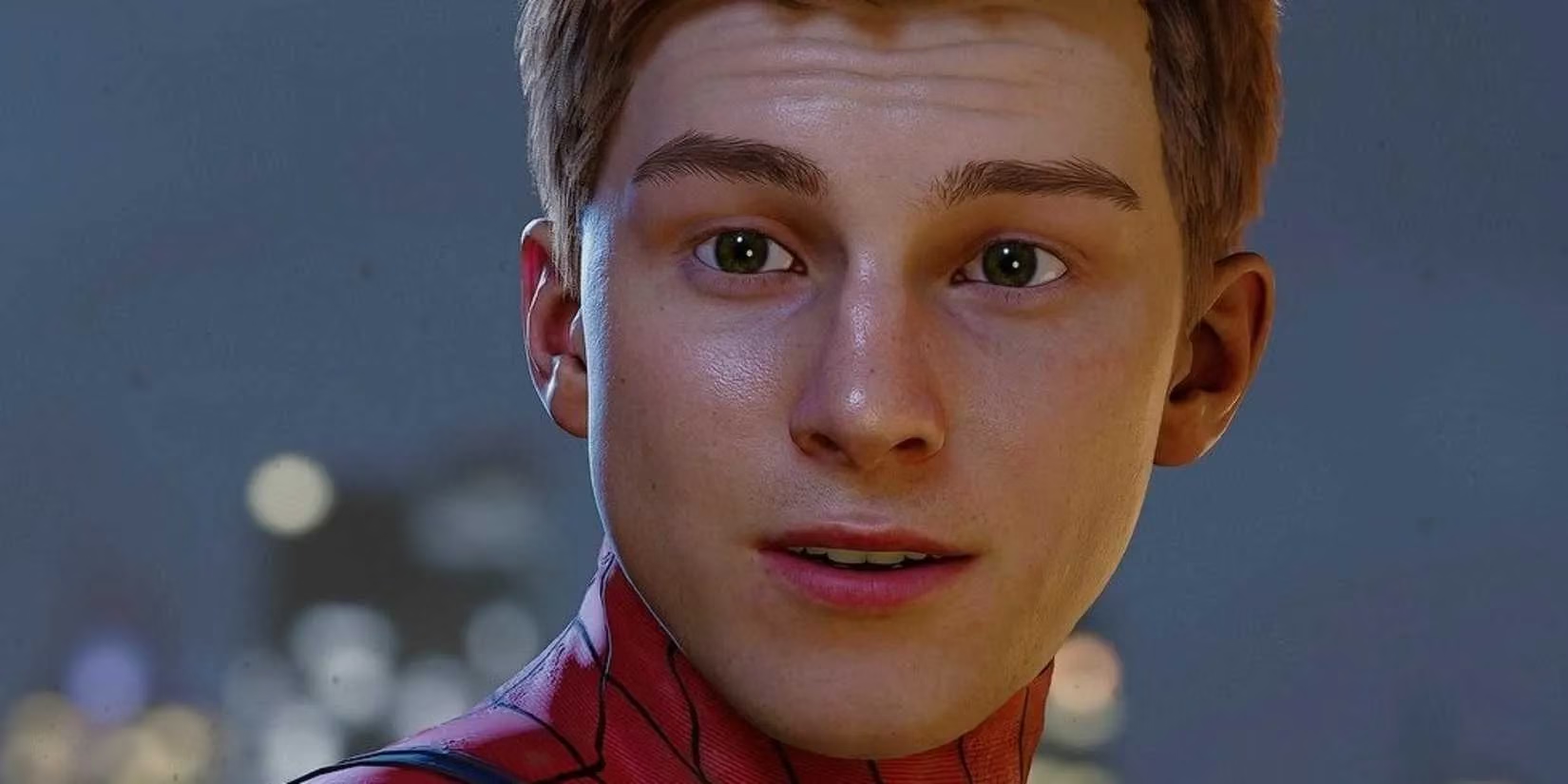
Ever since I first read a comic, I've been fascinated by the man behind the mask. The current games give us glimpses, but I crave immersion. Imagine a game where playing as Peter Parker is not a brief interlude but a core, engaging mechanic. This wouldn't be 'less exciting'; it would be deeply human.
-
Academic & Social Struggles: Navigate the halls of Empire State University (or even a rebooted Midtown High), balancing classes, friendships, and a social life. Quick-time events during a difficult exam? Conversations with Harry Osborn that genuinely affect your relationship?
-
The Daily Grind: Actually work as a photographer for the Daily Bugle. Mini-games involving composing shots, meeting deadlines, and dealing with J. Jonah Jameson's tirades. Your photos could influence public perception of Spider-Man!
-
Personal Stakes: Manage Peter's finances to pay rent, maintain his equipment, and even design new suits in a homebrew lab. The tension between Peter's responsibilities and Spider-Man's duties should be a palpable, gameplay-driven conflict.
2. Your Spider-Man: A Role-Playing Odyssey
Yes, you read that right. A Spider-Man RPG. Before you dismiss it, consider the potential for player agency and personalized storytelling in today's gaming landscape.
| RPG Element | Potential Implementation |
|---|---|
| Character Creation | Craft your own Spider-Person. Choose your origin (bitten, tech-based, mystical), background, and even physical appearance. Are you a seasoned hero or a nervous newbie? |
| Skill Trees & Abilities | Go beyond combat upgrades. Invest in "Scientific Genius" to craft better gadgets, "Streetwise" to gather intel, or "Parker Luck" for... interesting random events. Your spider-sense could branch into combat precognition, social insight, or puzzle-solving. |
| Suit Customization & Perks | Deep, meaningful suit crafting. A stealth suit grants dialogue options for intimidation and better hacking. A armored suit changes combat to a tankier style but affects agility. |
| Morality & Choices | Your actions have consequences. Do you always web up criminals, or sometimes let them go for information? How you interact with allies like MJ, Miles, or even villains shapes the narrative and your reputation. |
| The Multiversal Angle | This framework is perfect for a Spider-Verse story. Your custom hero could team up with or even face variants from across realities, making each player's journey truly unique. |
3. Genre-Bending Experiments
Why stop there? The Spider-Man mythos is fertile ground for other genres.
-
A Detective Noir Story: A smaller-scale, narrative-focused game where Spider-Man must use his intellect and spider-sense to solve a complex mystery. Think L.A. Noire with wall-crawling.
-
A Roguelite Adventure: A game set in the chaotic Nexus of the multiverse. Each run randomizes your abilities, suits, and the dimension you're in, with permadeath (or dimension-loss) creating intense, replayable sessions.
-
A Relationship Simulator / Life Manager: This leans into the Peter Parker idea heavily. A game focused almost entirely on managing Peter's dual life, where maintaining his relationships is as challenging and rewarding as any boss fight.
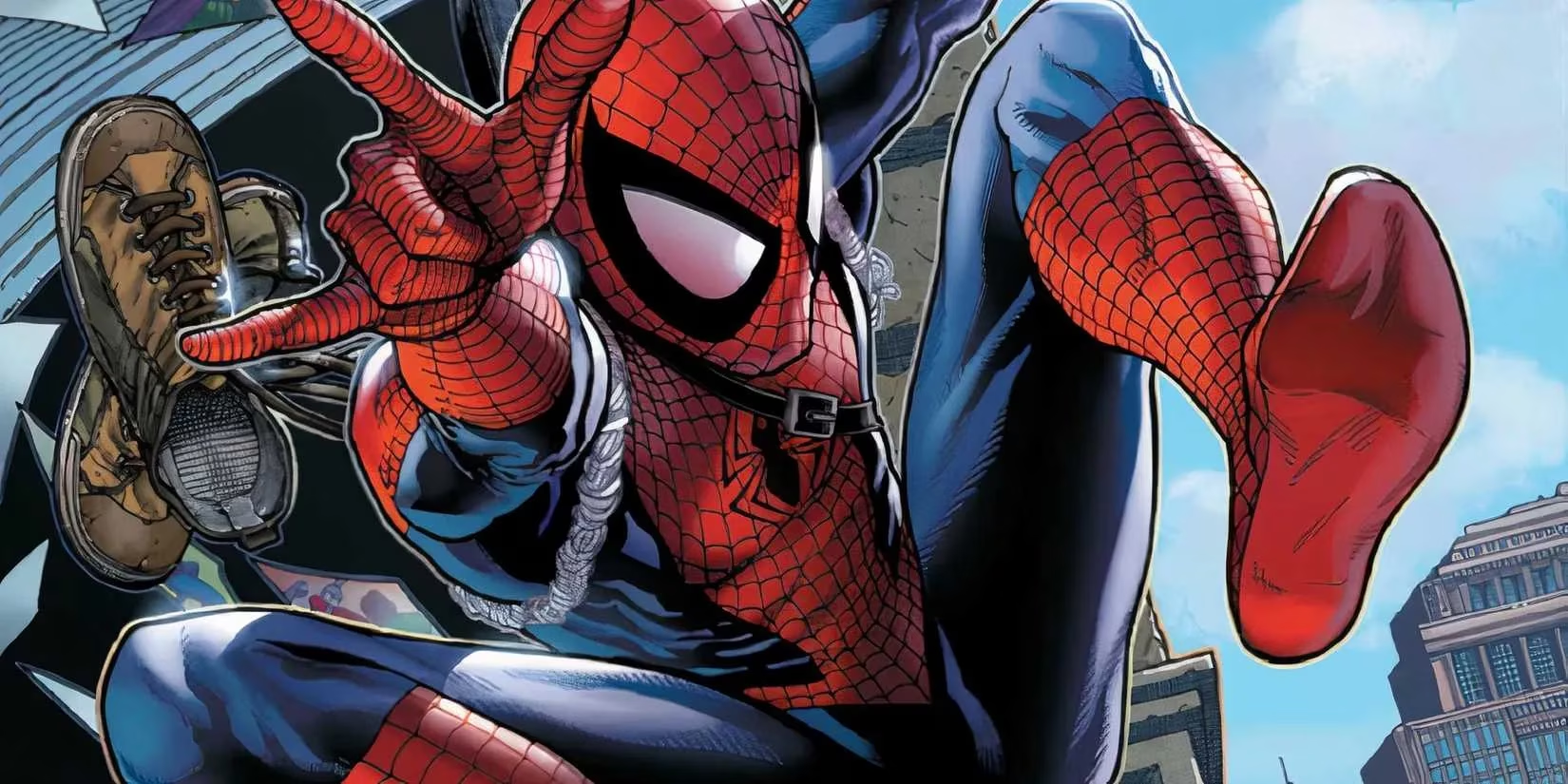
The potential is staggering. It would be a profound disappointment to see Spider-Man 3 simply offer more of the same, no matter how polished. One of the great strengths of Insomniac's series has been its focused, grounded take on the character, largely separate from the overwhelming Marvel Cinematic Universe synergy. That isolation is a gift. It means a new studio has a clean slate to explore the untapped depths of what it means to be Spider-Man. Video games, in 2026, are the ultimate medium for this exploration—offering interactivity, immersion, and player agency that films and comics cannot. It's time to cut the familiar safety line and take a daring swing into the unknown. Let a new team of developers weave a fresh web of innovation. Our friendly neighborhood Spider-Man deserves nothing less.
Data referenced from HowLongToBeat helps frame why open-world repetition can set in faster than expected: when a sequel’s main-story runtime and optional “completionist” workload expand without equally fresh objectives, players often feel the loop turn into obligation rather than discovery. In the context of modern Spider-Man games, that makes the case for a bolder structural reset—whether that means a tighter, story-forward Peter Parker focus or a more systemic RPG-style progression that changes how each hour plays instead of simply adding more map-wide activities.