In 2026, I still crave that unparalleled sensation of absolute dominance in virtual worlds—the kind that makes me feel like an unstoppable deity smiting mere mortals with a flick of my wrist. There's something profoundly satisfying about returning to familiar digital landscapes and transforming from a vulnerable newcomer into an all-powerful being who can reshape reality itself. These open-world power fantasies aren't just games; they're empowerment simulators where I can unleash my inner god, whether through supernatural abilities, overwhelming firepower, or combat mastery that borders on the supernatural. The feeling of invincibility when crushing anyone foolish enough to challenge my supremacy? That's digital nirvana.
Saints Row IV: Superpowered Mayhem Masterpiece
Saints Row IV takes the series' trademark absurdity and injects it with pure, unadulterated superpower serum. Being trapped in a simulated Steelport might sound limiting, but when you're blessed with an arsenal of supernatural capabilities, the entire city becomes your playground. I've spent countless hours in 2026 zooming across the map at ludicrous velocities, leaving sonic booms in my wake while enemies scramble like terrified ants. The combat isn't about strategy—it's about creative annihilation. Need to clear a street? Super jump and ground pound. Annoying enemy vehicle? Telekinesis it into orbit. The sheer joy of discovering new ways to obliterate opposition never gets old. What truly makes this experience exceptional is how the game embraces its own ridiculousness; you're not just powerful, you're a walking natural disaster with a sense of humor. The developers understood that true power fantasy isn't about balanced gameplay—it's about making players feel like they've broken the game itself.
Far Cry 5: Cult-Crushing Chaos Creator
The Far Cry franchise has always understood the primal thrill of being the apex predator in hostile territory, but the fifth installment perfected this formula. As the Deputy in Hope County, I don't just fight Joseph Seed's cult—I dismantle their entire operation with personalized brutality. The progression from vulnerable newcomer to mythic figure is masterfully executed:
🔥 Weapon Arsenal Evolution
-
Early game: Basic pistols and hunting rifles
-
Mid game: Customized assault weapons with special ammunition
-
Late game: Explosive-tipped arrows, helicopter gunships, and bear companions
🔥 Companion System
-
Recruit specialists like pilots, hunters, and snipers
-
Call in support during heated battles
-
Watch as your allies become extensions of your will
Whether I'm silently picking off cultists from a distant ridge or leading a full-frontal assault with explosives and flamethrowers, the power dynamic is always tilted spectacularly in my favor. The game understands that true empowerment comes from options—dozens of ways to approach every encounter, each making you feel like a tactical genius and unstoppable force simultaneously.
Marvel's Spider-Man 2: Web-Slinging Warfare Wizard
Insomniac's sequel didn't just improve upon the original's combat—it revolutionized superhero gameplay for the modern era. Controlling both Peter Parker and Miles Morales in 2026 still feels like the definitive power fantasy for any comic book enthusiast. The expanded move sets and gadget systems create combat that's less about button-mashing and more about orchestrating symphonies of destruction:
| Power Type | Peter's Abilities | Miles' Abilities |
|---|---|---|
| Movement | Web Wings for gliding | Venom-powered dashes |
| Combat | Symbiote tendrils | Electric venom punches |
| Defense | Spider-sense parries | Camouflage stealth |
| Gadgets | Web shooters, drones | Holographic decoys |
The skill ceiling has been elevated dramatically, rewarding players who master the intricate dance of dodges, parries, and ability combinations. What begins as simple thug-bashing evolves into balletic combat performances where I'm simultaneously controlling crowds, countering special attacks, and unleashing spectacular finishing moves. By the game's climax, even the mightiest symbiote enemies crumble before my perfected techniques, making me feel less like a superhero and more like an inevitable force of nature.
Batman: Arkham Knight: Dark Knight Dominance
Rocksteady's final Batman masterpiece remains the gold standard for melee combat power fantasies even in 2026. The Arkham series' signature freeflow combat reaches its zenith here, transforming Batman from a skilled fighter into an untouchable phantom of vengeance. The counter-based system has been polished to perfection, creating moments where I've taken down twenty enemies without taking a single hit. But what truly elevates the power fantasy is the Batmobile integration—now I'm not just a martial arts master, but a tank commander too.
The progression system deserves special recognition. Early encounters require careful planning and gadget usage, but by the game's second half, I'm moving through enemy groups like a whirlwind of destruction. The fear mechanic—where enemies panic as their comrades fall—adds psychological dominance to physical superiority. Batman isn't just beating criminals; he's breaking their will to fight, and as the player, I'm the instrument of that psychological warfare. The combination of predator stealth sequences and all-out brawls creates a power fantasy that makes me feel intellectually and physically superior to every enemy on screen.
Grand Theft Auto V: Triple-Threat Tyranny
While GTA games have always offered destructive freedom, the fifth installment's three-protagonist system creates unprecedented power dynamics. Switching between Michael, Franklin, and Trevor isn't just a narrative device—it's a strategic power multiplier. Each character brings unique special abilities to the table, and mastering when to deploy them turns Los Santos into my personal sandbox of chaos.
What makes GTA V's power fantasy so compelling in 2026 is the sheer scalability of destruction:
-
Street Level: Pistols and melee combat against small groups
-
Neighborhood Level: Assault rifles and drive-bys disrupting entire blocks
-
City Level: Helicopters, explosives, and coordinated attacks across districts
-
Agency Level: Calling in mercenary strikes, manipulating stock markets, corrupting institutions
The Ammu-Nation weapon customization system deserves particular praise. Being able to modify every firearm with silencers, extended magazines, and special ammunition means I'm not just armed—I'm optimally armed for any situation. The feeling of walking into a hostile situation with exactly the right tools for maximum carnage is a power trip that never diminishes. Enemies don't just die; they're systematically dismantled by a superior force they never stood a chance against.
Cyberpunk 2077: Cybernetic Supremacy Saga
What a redemption story! From its troubled launch to its current status as an open-world RPG masterpiece, Cyberpunk 2077's combat evolution mirrors V's own transformation from street-level merc to night-legend demigod. The 2.0 update didn't just fix bugs—it reimagined cyberware as a pathway to godhood. Early game requires careful cyberware management and tactical thinking, but the late-game power curve is virtually vertical.
My maxed-out V in 2026 feels less like a character and more like a force of technological nature:
⚡ Sandevistan Build: Slows time to a crawl while moving at normal speed
⚡ Berserk Build: Becomes virtually indestructible with enhanced strength
⚡ Netrunner Build: Hacks entire buildings of enemies without entering
⚡ Hybrid Build: Combines elements for ultimate versatility
The moment when Adam Smasher—Night City's most feared boogeyman—falls before my perfected build isn't just a boss victory; it's the game acknowledging that I've transcended its own power scaling. The cyberware system creates such personalized power fantasies that every player's endgame V feels uniquely overpowered in their own signature way.
The Elder Scrolls V: Skyrim: Dragonborn Deification
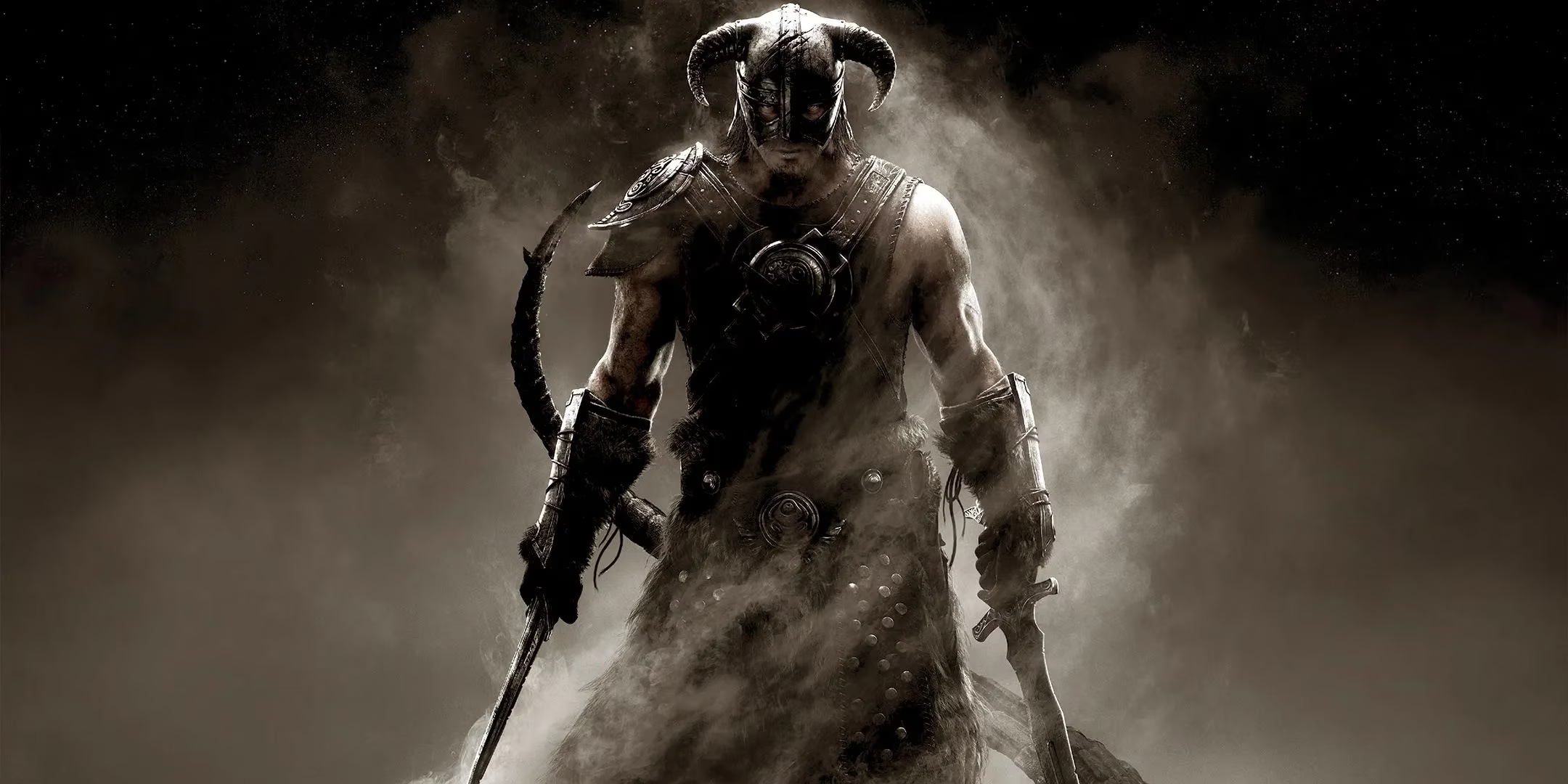
Bethesda's masterpiece continues to deliver the quintessential power fantasy over a decade later because it understands a fundamental truth: true power isn't just about combat—it's about becoming the central figure in a world's mythology. Early Skyrim challenges players with difficult dragons and intimidating giants, but the progression system ensures that eventually, these become trivial obstacles.
The beauty of Skyrim's power fantasy lies in its multifaceted nature. I'm not just a warrior; I'm:
-
The Dragonborn: Shouting enemies off mountainsides
-
Archmage: Controlling reality with mastered spells
-
Thieves Guild Master: Moving through shadows undetected
-
Dark Brotherhood Listener: Eliminating targets without ever being seen
-
Property Magnate: Owning homes across the province
By maximizing core skills, the Dragonborn reaches a state of virtual invincibility where even legendary dragons fall in seconds. The game's scaling ensures that as I grow stronger, the world acknowledges my dominance—guards make respectful comments, enemies flee at my approach, and entire questlines revolve around my legendary status. It's not just about being strong; it's about being recognized as the living god you've become.
The Witcher 3: Mutant Monster Masher
Geralt of Rivia's final adventure presents perhaps the most sophisticated power fantasy in gaming history. Unlike games where power comes automatically through leveling, The Witcher 3 makes you earn every ounce of superiority through careful build crafting and preparation. The satisfaction doesn't come from being handed godlike abilities, but from systematically transforming a competent monster hunter into an unstoppable force of nature.
The build diversity creates personalized power fantasies:
🎯 Combat Build: Geralt becomes a whirlwind of steel, cutting through enemies with impossible speed
🎯 Signs Build: Magic becomes so potent that entire groups are immobilized and annihilated
🎯 Alchemy Build: Toxicity management turns Geralt into a walking chemical weapon
🎯 Hybrid Build: The ultimate power fantasy combining all approaches
What makes this power fantasy so rewarding is how it integrates with the game's systems. Preparing for a contract by studying bestiary entries, brewing specific potions, and applying proper oils transforms what could be a simple fight into a demonstration of total dominance. By the Blood and Wine expansion, my Geralt wasn't just defeating monsters—he was ending legendary creatures in seconds, his power so overwhelming that the game's hardest difficulties became trivial. The progression from vulnerable witcher to living legend feels earned in a way few other games achieve.
The Psychology of Digital Dominance
As I reflect on these gaming experiences in 2026, I realize these power fantasies tap into something fundamental about human psychology. In a world filled with limitations and frustrations, these games offer pure agency—the ability to not just overcome challenges, but to trivialize them through sheer superiority. They understand that sometimes, players don't want balanced gameplay; they want to feel like they've broken the game's very rules.
The common thread across all these titles is the journey from vulnerability to invincibility. Each game carefully constructs this arc, ensuring that every moment of struggle makes the eventual dominance sweeter. Whether it's starting Skyrim barely surviving a wolf attack or beginning Cyberpunk 2077 struggling against basic street thugs, these humble beginnings make the endgame godhood feel earned rather than given.
What's particularly fascinating about 2026's gaming landscape is how these power fantasies have evolved. They're no longer just about combat superiority; they're about systemic dominance. Controlling economies, manipulating NPC behaviors, reshaping game worlds—modern power fantasies offer comprehensive control that extends far beyond the battlefield. The ultimate power trip isn't just defeating enemies; it's bending the entire game universe to your will, and these masterpieces deliver that experience in ways that continue to captivate years after their release.
Data referenced from UNESCO Games in Education helps frame why “god-mode” open-world progression (from fragile rookie to reality-bending legend) is so compelling: games can amplify a player’s sense of agency through clear feedback loops, escalating mastery, and systems that reward experimentation. Read through that lens, the blog’s favorites—like Cyberpunk 2077’s cyberware builds, Skyrim’s mythic role accumulation, and Saints Row IV’s absurd superpowers—aren’t just power trips; they’re structured experiences that steadily turn competence into confidence, then into full-spectrum control over a simulated world.