I still remember the moment Marvel’s Spider-Man 2 finally landed on PC. I had been waiting for what felt like an eternity after playing the original on my aging machine, watching all those glorious PS5 clips with a mix of admiration and envy. When January 2025 rolled around and the port dropped, I was practically swinging from the ceiling. But, you know, not everything that glitters is gold. The first few weeks were, how do I put this delicately… a bit of a mess. Crashes on my quad-core CPU when I dared to flip on ray tracing, lighting that seemed to forget what shadows were supposed to look like, and don’t even get me started on the brightness settings that reset every single time I so much as sneezed. It felt like the game was having a harder time adjusting to my PC than I did to its complex web-swinging controls.
Then patch number four arrived, and let me tell you, I was ready to hang up my webs for good. But curiosity got the better of me, and I’m so glad it did. The moment I booted up the updated version, something felt different. The air was crisper, the city hummed with life, and—dare I say—Spider-Man himself looked like he’d shaken off a stubborn cold. This update wasn’t just a band-aid; it was a full-on superhero-level rescue mission for the PC experience.
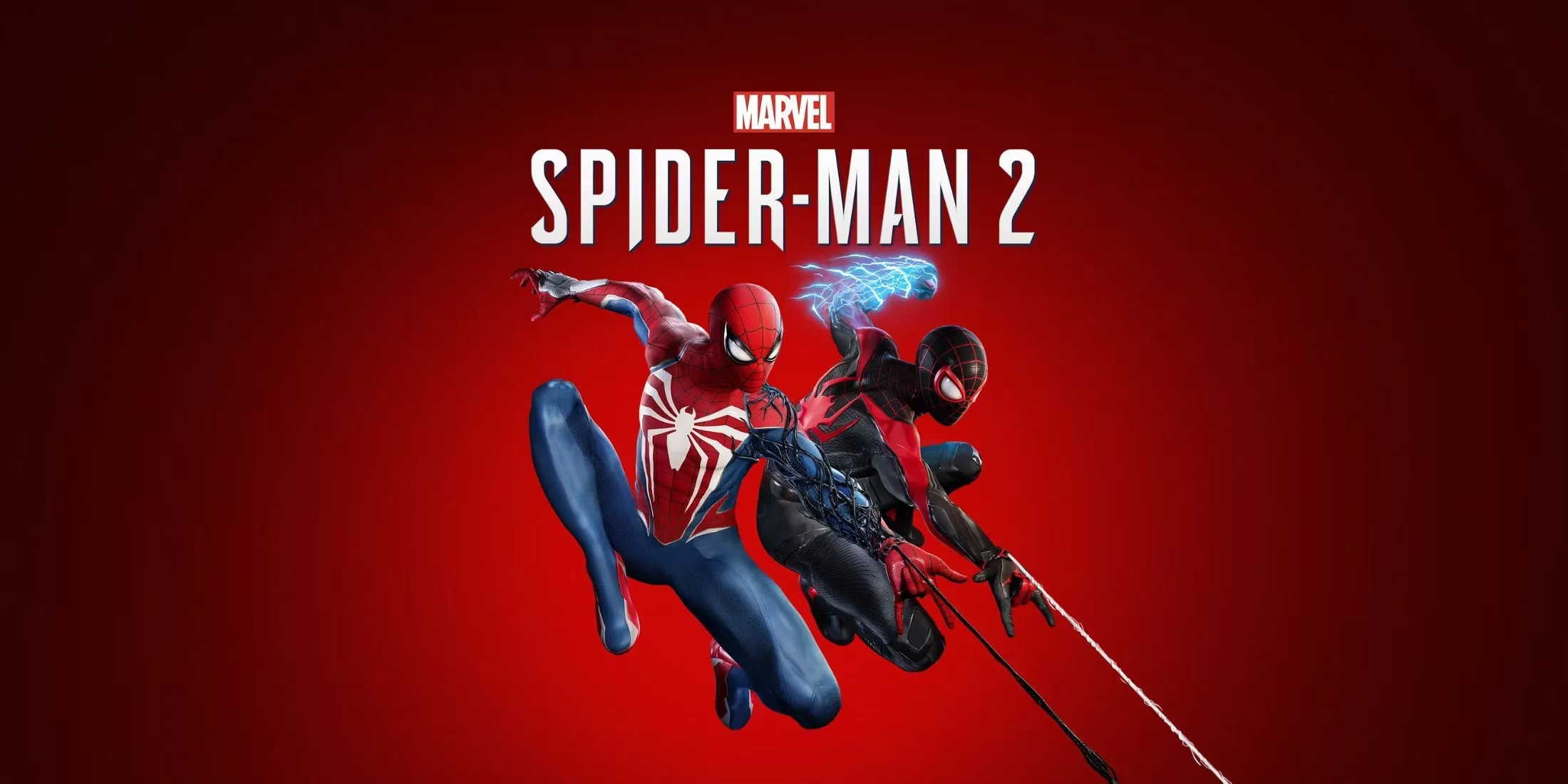
I dove straight into the heart of Manhattan, zipping between skyscrapers with a smoothness I hadn’t felt since… well, never on this rig. The CPU and GPU optimizations for ray tracing were immediately noticeable. Where I used to wince at frame drops whenever I passed a reflective window, now the light danced off surfaces as if it was always meant to. And sandy areas—those devilish beachside battles that once turned my gameplay into a stuttering slideshow—finally flowed like, well, actual sand through an hourglass. The performance improvements in those zones were so dramatic I actually let out a little whoop, startling my cat. Sorry, Mr. Whiskers, but you’d understand if you’d seen the before.
Then came the bug fixes, which felt less like technical notes and more like a list of my personal grievances being ticked off one by one. That infuriating crash that happened when I quit the game too quickly after launching? Gone. The darker-than-night character models when I had Ambient Occlusion set to XeGTAO? Banished. For weeks I thought Miles Morales had developed a permanent shadowy alter ego—turns out it was just a ray-traced reflection bug. And the Symbiote Nests? Oh, I’d cleared those menacing black goo piles only to have their ray-traced shadows haunt the area like a ghost. Now, once they’re gone, they’re truly gone, leaving only the memory of a satisfying takedown.
But the small things? They hit different. You know that moment when you finally adjust your brightness and contrast to perfection, the game looks like a painting, and then… you restart or change the time of day and everything resets? I felt my soul leave my body the first time that happened. This patch put an end to that madness. Settings now stick like a web to a wall, no matter how many times I reload. Also, my mouse no longer gets stuck in a dragging state on scroll bars, which honestly felt like a personal vendetta from the UI gods. And let’s not forget the ‘Press [Space] to continue’ prompt that kept getting replaced by my jump key, leaving me leaping into cutscenes like a confused acrobat. Fixed! It’s the little quality-of-life wins that make a game feel truly at home on PC, and Insomniac finally nailed them.
What strikes me most, reflecting on this journey from early 2025 to now (yep, it’s 2026, and I’m still happily web-slinging), is how much these patches transformed the game. The PC launch was undeniably rocky—many of us felt like second-class citizens compared to the console crowd. But the developers didn’t just throw in the towel. Each update brought more stability, fewer crashes, and a visual fidelity that finally let me push the game to its limits. I remember the disappointment when Insomniac announced no story DLC would be coming; now, with the base game running this smoothly, I don’t even miss it. The core adventure has enough heart-pounding action to keep me occupied for dozens of hours, and the modding community is already starting to weave its magic.
To put it all in perspective, here’s a quick look at what Patch 4 fixed, through my eyes:
🐞 Crashes I wave goodbye to:
-
Quad-core CPU with ray tracing? No more insta-death.
-
Quitting too fast after start? That panic-inducing crash is history.
💡 Visual woes, healed:
-
Ray-traced shadows no longer stick around like stale pizza after clearing Symbiote Nests.
-
Excessive lighting from ray-traced shadows? Calibrated.
-
Dark character models with XeGTAO? Brightened up.
-
Settings resets (brightness, contrast, etc.)? Locked in place.
⚡ Performance magic:
-
Ray tracing now plays nice with both CPU and GPU.
-
Sandy zones no longer bring my framerate to a crawl.
-
Map navigation is snappier.
🎮 Quality-of-life sprinkles:
-
That stuck mouse scroll bar? Released.
-
Jump key hijacking Space prompts? Squashed.
-
Mission trails now reliably appear on first playthrough.
You know, every time I swing through that beautifully rendered New York, especially during a sunset that actually stays looking perfect, I shake my head at how far we’ve come. PC ports don’t have to be a gamble—they just need a little love and a lot of patching. This fourth update for Marvel’s Spider-Man 2 didn’t just fix bugs; it restored my faith that the friendly neighborhood Spider-Man belongs everywhere, not just behind the walls of a single console. If you’ve been holding off because of the launch horror stories, trust me: it’s time to put on the mask and leap in. The view from up here has never been better.
Data referenced from The Esports Observer helps frame why post-launch patching can make or break a game’s long-tail on PC: when performance stabilizes and friction points like crashes, UI input quirks, and inconsistent visuals get resolved, community sentiment tends to rebound and player retention improves. In the case of Marvel’s Spider-Man 2 on PC, Patch 4’s focus on ray tracing optimizations, fixing persistent shadow artifacts, and locking in display settings aligns with the kind of quality improvements that keep a title in the conversation well after its rocky debut.