In a significant reversal of its digital distribution strategy, Sony Interactive Entertainment has lifted regional purchasing restrictions for several of its flagship PlayStation titles on the Steam platform as of mid-June 2026. This move, which comes after more than a year of intense community backlash and review-bombing campaigns, effectively reopens access to major games like Helldivers 2, God of War Ragnarok, The Last of Us Part 2 Remastered, and Marvel's Spider-Man 2 for Steam users in over 177 countries where they were previously unavailable. The decision marks a pivotal moment in the evolving relationship between traditional console platform holders and the open ecosystem of PC gaming storefronts.
The saga began with the global launch of Helldivers 2, a cooperative shooter developed by Arrowhead Game Studios. Initially, Sony mandated that players link their Steam accounts to a PlayStation Network (PSN) account, a service not uniformly available in all nations supported by Steam. This policy acted like a digital drawbridge being raised, abruptly cutting off access to players in regions like Venezuela, Haiti, and Serbia. The community's response was swift and severe, leading to coordinated review-bombing of several PlayStation-published titles on Steam. Faced with this overwhelming negative feedback, both Sony and Arrowhead were forced to rescind the PSN requirement for Helldivers 2, setting a precedent for future releases.
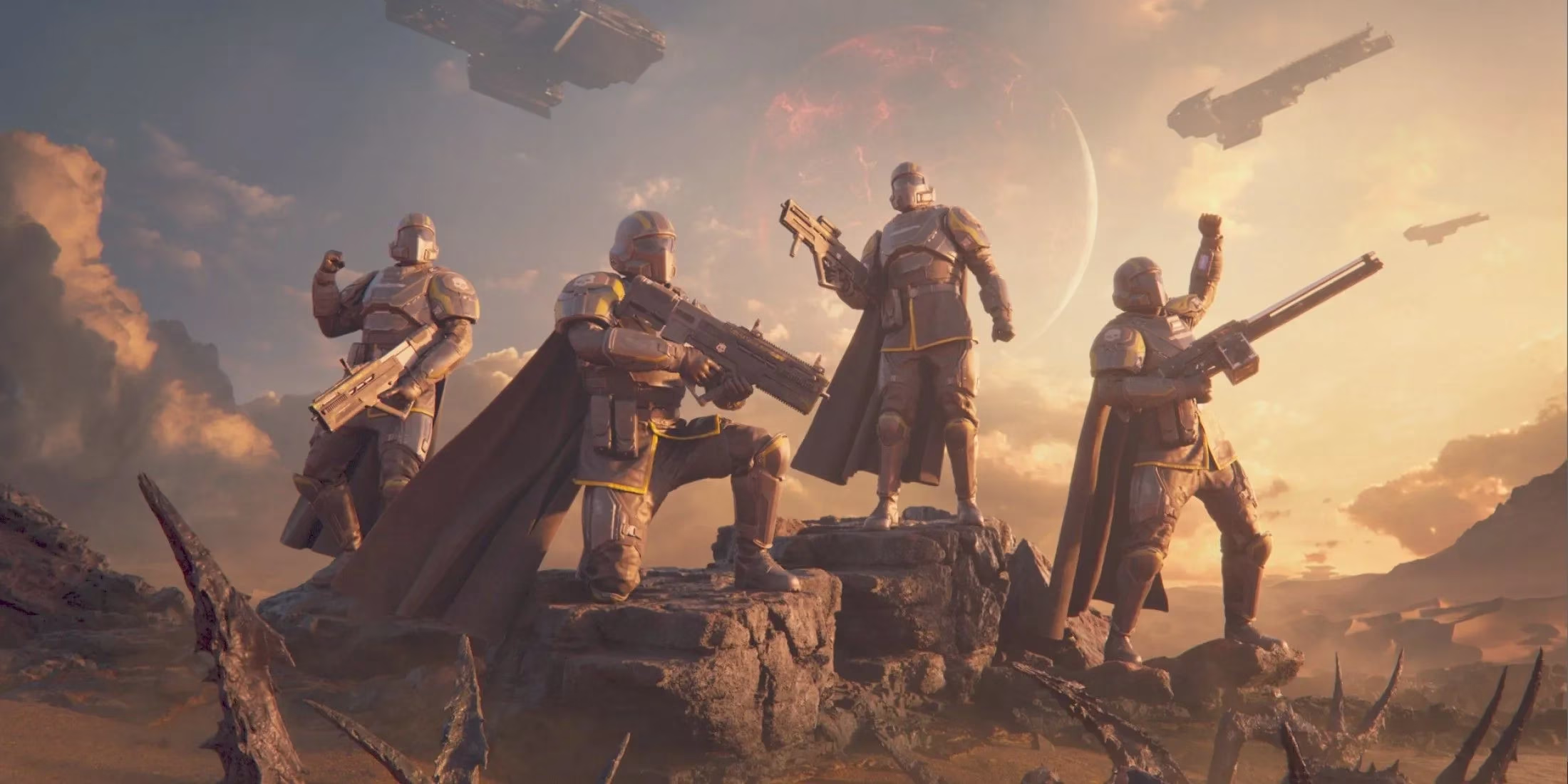
Now, the restrictions have been formally removed. According to data from SteamDB and reports from industry trackers, the change went into effect on Friday, June 13, 2025, at 1:54 PM Eastern Time. The four major titles are now purchasable without the previous geo-blockades. For gamers in affected regions, the return of these games is less like a simple store update and more akin to a long-lost library reopening its doors after a protracted legal dispute, finally granting access to coveted cultural artifacts.
The Impacted Titles & The Lingering PSN Question
The core list of games benefiting from this policy shift includes some of PlayStation's most celebrated modern franchises:
-
Helldivers 2: The game that sparked the initial controversy is now fully accessible.
-
Marvel's Spider-Man 2: Insomniac's web-slinging sequel.
-
God of War Ragnarok: The epic conclusion to Kratos's Norse saga.
-
The Last of Us Part 2 Remastered: Naughty Dog's acclaimed, emotionally charged narrative experience.
It is important to note that while the purchase barrier has been lifted, the PSN integration itself has transitioned from mandatory to optional. Linking a PSN account to Steam still offers certain perks, such as cross-platform friend lists and trophy syncing, but it is no longer a gatekeeper for playing the core single-player or cooperative experiences of these specific games. However, this new policy is not universally applied across Sony's entire Steam catalog. For instance, Ghost of Tsushima Director's Cut still requires a PSN account for its online multiplayer Legends mode and to enable the PlayStation overlay feature on PC.
Context and Community Reaction
This policy reversal occurred during a notably successful week for PlayStation on PC. Just days prior, the highly anticipated PC port of Stellar Blade, developed by Shift Up, launched on Steam (June 11, 2025) to resounding success, surpassing 100,000 concurrent players within its first 24 hours. Many in the community observed that the timing of Sony's restriction-removal announcement seemed strategically aligned with capitalizing on the positive momentum generated by Stellar Blade's launch. The reaction from fans has been overwhelmingly positive, viewing the move as a long-overdue correction that respects the global nature of the PC gaming audience.
Looking Forward: A Strategic Pivot?
Sony's decision signals a nuanced adjustment in its approach to the PC market. While backing away from enforcing PSN for single-player and certain co-op experiences, the company has reiterated its commitment to live-service titles, such as the upcoming reboot of Marathon by Bungie. These games, with their inherent focus on persistent online worlds and social features, may still employ different account-linking strategies. The long-term effect on Steam sales for Sony's first-party portfolio remains to be seen, but early indicators suggest that removing artificial barriers leads to greater commercial and community goodwill. For the global PC gaming community, this development represents a hard-won victory for consumer choice, proving that unified player feedback can indeed influence corporate policy, turning a once-fractured marketplace into something as interconnected and resilient as a mycelial network beneath a forest floor. As we move further into 2026, this event will likely be seen as a benchmark for how traditional platform holders navigate the decentralized world of PC gaming.