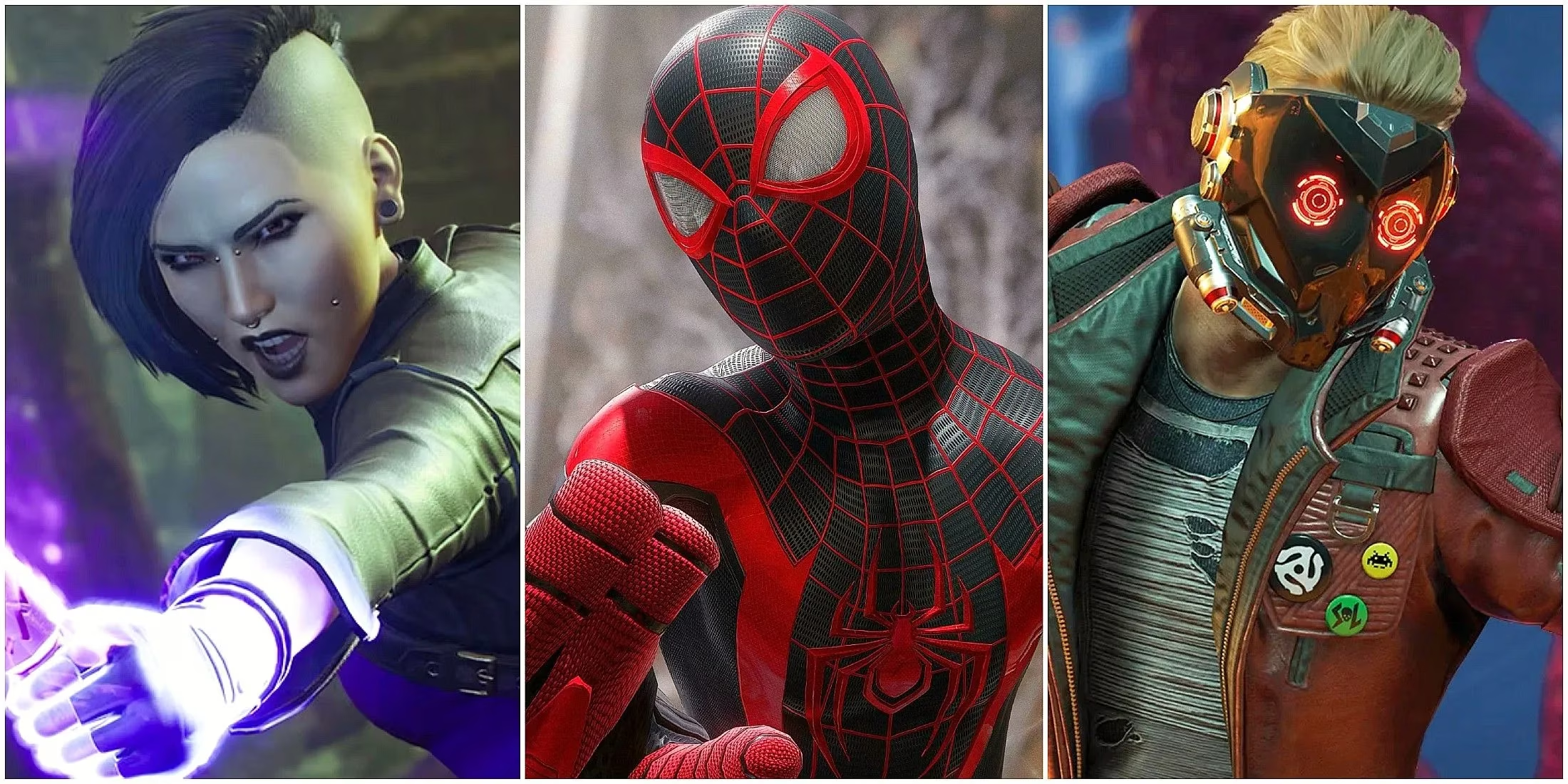
In a modest gaming den tucked away from the neon glow of 2026, a dedicated Marvel enthusiast named Alex found himself scrolling through his digital library with a peculiar itch. He had already watched every film, devoured countless comic arcs, and even dabbled in tabletop role‑playing campaigns set in the Marvel multiverse. What remained, he realized, was a mountain of interactive adventures—some of which supposedly demanded dozens, even hundreds, of hours to fully unravel. That evening, Alex made a pact with himself: he would embark on a chronological pilgrimage through the most time‑consuming Marvel games, not merely beating their main stories, but plumbing every secret, side activity, and collectible they had to offer.
His first stop felt deceptively breezy. Marvel’s Spider‑Man: Miles Morales dropped him into a snow‑blanketed New York already familiar from Peter Parker’s earlier outings, yet the compact scale was intentional. The young hero’s coming‑of‑age tale could technically be finished in a single dedicated sitting—twelve hours if one rushed. Alex, however, let himself linger. He chased holographic pigeons, mastered venom‑charged gadget combos, and swung through the frosty canyons of Harlem just to hear Miles’ banter with his neighbours. Even this “smaller” title contained hidden audio logs, Underground cachets, and postcard‑worthy vistas that stretched the playtime closer to twenty hours. It was a reminder that immersion, not raw length, often defined a great Marvel experience.
Nearby on his shelf sat two brick‑shaped odysseys that promised far more exhaustive treks. LEGO Marvel Super Heroes and its sequel LEGO Marvel Super Heroes 2 were gifts from a friend who knew Alex’s weakness for toilet‑paper‑roll‑humour and staggering rosters. The first game unfolded an original yarn that mashed together the entire Marvel Universe—Stan Lee cameo included—and handed players control of over one hundred icons, from the expected Iron Man to obscure gems like Squirrel Girl. The twelve‑hour campaign was merely the key to a vault of secrets. Alex soon found himself replaying levels in Free Play mode, smashing every shimmering object, and piecing together gold bricks late into the night. Completionists, he discovered, could easily invest fifty to sixty hours, especially if they aimed to unlock every character creator piece.
Its successor amplified the ambition. Chronopolis, a patchwork realm stitched from multiple timelines, offered an even denser web of collectibles and a vastly improved custom character suite. Alex spent an afternoon designing his ideal symbiote‑infused hero before tackling missions that spanned ancient Egypt, Noir‑era New York, and futuristic Knowhere. The hub itself was a puzzle box—flying races, hidden puzzles, and character‑specific gates ensured that no two sessions felt identical. By the time the credits rolled on Kang’s defeat, his save file clocked over seventy hours, and he still hadn’t coaxed every comic panel out of the world.
Curiosity next tugged Alex toward a game that had become a digital ghost. Marvel’s Avengers, despite being delisted from storefronts years prior, remained fully functional on his console—servers still humming thanks to a quiet maintenance announcement Square Enix had never rescinded. The cinematic campaign was a rollercoaster of set‑pieces starring Kamala Khan, but the true yardstick lay in the War Table missions and end‑game raids. Alex dedicated weeks to levelling each Avenger, from Captain America’s shield mastery to Mighty Thor’s lightning combos and the PlayStation‑exclusive Spider‑Man’s acrobatic flair. The grind wasn’t for everyone, and the repeated villain sectors wore thin, but for a hero‑collector like Alex, the opportunity to max out a dozen distinct move‑sets was a siren call. By the time he set down the controller, his total playtime had swelled beyond one hundred and twenty hours, a number that rivaled pure role‑playing epics.
A palette cleanser arrived in the form of Marvel’s Guardians of the Galaxy, a title so criminally overlooked that Alex nearly skipped it. Where he expected dreary live‑service echoes, he found a linear, story‑driven jewel with the spirit of an Uncharted adventure. The game built its own scrappy, dysfunctional family that never felt like a pale imitation of the films. Star‑Lord’s huddle mechanics, Drax’s literal world‑view, and a stellar licensed soundtrack carried Alex through a fifteen‑hour narrative he immediately replayed to see alternate dialogue choices. With exploration for cosmetic outfits and lore entries, a thorough run approached thirty hours—proof that focus could be as satisfying as sprawl.
Then came the twin pillars of Insomniac’s web. Marvel’s Spider‑Man, the 2018 phenomenon, still gleamed in its remastered form. Alex relived Peter Parker’s struggle against Mister Negative and Doctor Octopus, but he also submerged himself in the three‑part \u201cThe City That Never Sleeps\u201d expansion, which added another ten hours of Black Cat tomfoolery, Hammerhead gang wars, and Silver Sable drama. Completing every backpack, landmark token, and Taskmaster challenge pushed his clock to roughly seventy hours. The sequel, Marvel’s Spider‑Man 2, arrived with enhanced traversal wings and a riveting Venom arc, yet to Alex’s mild surprise it wrapped up faster—around thirty‑five hours for full completion. The streamlined side activities made the Platinum trophy pop with barely any grind, a bittersweet efficiency for someone who yearned for more.
At last, Alex turned to the game that had always loomed largest in forum discussions: Marvel’s Midnight Suns. This was no mere action title; it welded XCOM‑style tactical combat, deep deck‑building, and a sprawling abbey hub that resembled a superhero soap opera. He created a Hunter, weaving light and dark power unlocks as romances and friendships with Blade, Magik, and Wolverine blossomed. Each night offered a choice—upgrade abilities via training dummies, fish with Ghost Rider, or push deeper into demonic portals for rare essence. The story campaign alone devoured sixty hours, but the optional side missions, collectible tarot cards, and randomised threat rooms inflated the total so that when Alex finally confronted the demon mother Chthon, his playtime sat just shy of one hundred and ten hours. It was, without question, the longest single‑player Marvel experience ever crafted, and despite its niche design, it had carved a permanent home in his memory.
Looking back from the summer of 2026, Alex realized his journey had spanned every genre from action‑adventure to tactical role‑playing, each game demanding a different kind of patience. Whether it was the brisk charm of Miles Morales or the sprawling strategy of Midnight Suns, the common thread remained the same—a love for characters who had leaped out of comic panels and into interactive worlds where fans could finally live the legend, one lengthy adventure at a time.