When Marvel's Spider-Man 2 arrived on PC on January 30, 2025, it marked another step in Sony's gradual embrace of desktop hardware. The port was handled by Nixxes Software, a first-party Sony studio with a growing reputation for translating PlayStation experiences into PC-friendly releases. By 2026, the launch is no longer a fresh headline, but it remains a useful snapshot of how a major first-party title can be reshaped for a new audience without losing its identity. The core adventure stays intact; the surrounding technical framework is what changes.
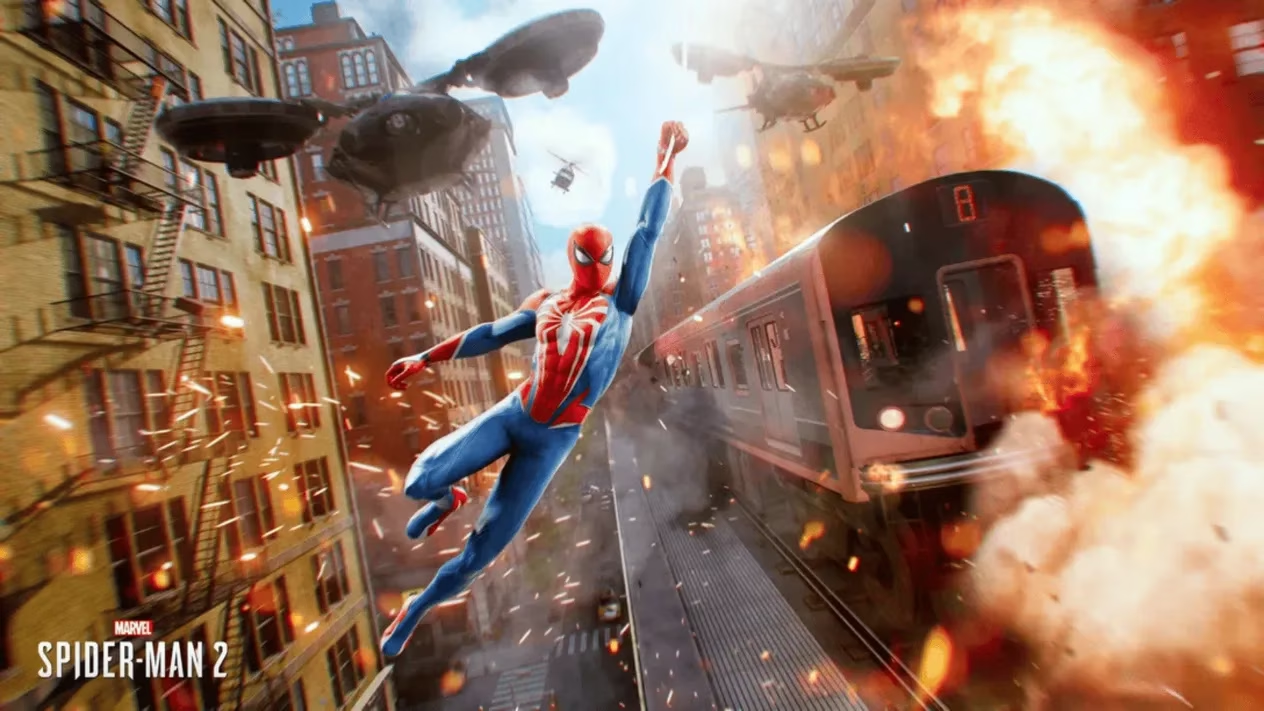
The PC version is not a simple re-release with a higher resolution slider. Nixxes built a feature set that treats the port like a bespoke suit fitted to a different body: the silhouette is the same, but every seam has been adjusted for the new frame. Players can expect upscaling and frame generation, ultrawide support across 16:9, 21:9, and 32:9 aspect ratios, ray-traced shadows and ambient occlusion, improved ray-traced reflections, and DualSense controller support. Nixxes also produced a trailer to demonstrate these upgrades, giving the web-slinging sequel a showcase for its more demanding visual options.
A Feature Set Built for the Desktop
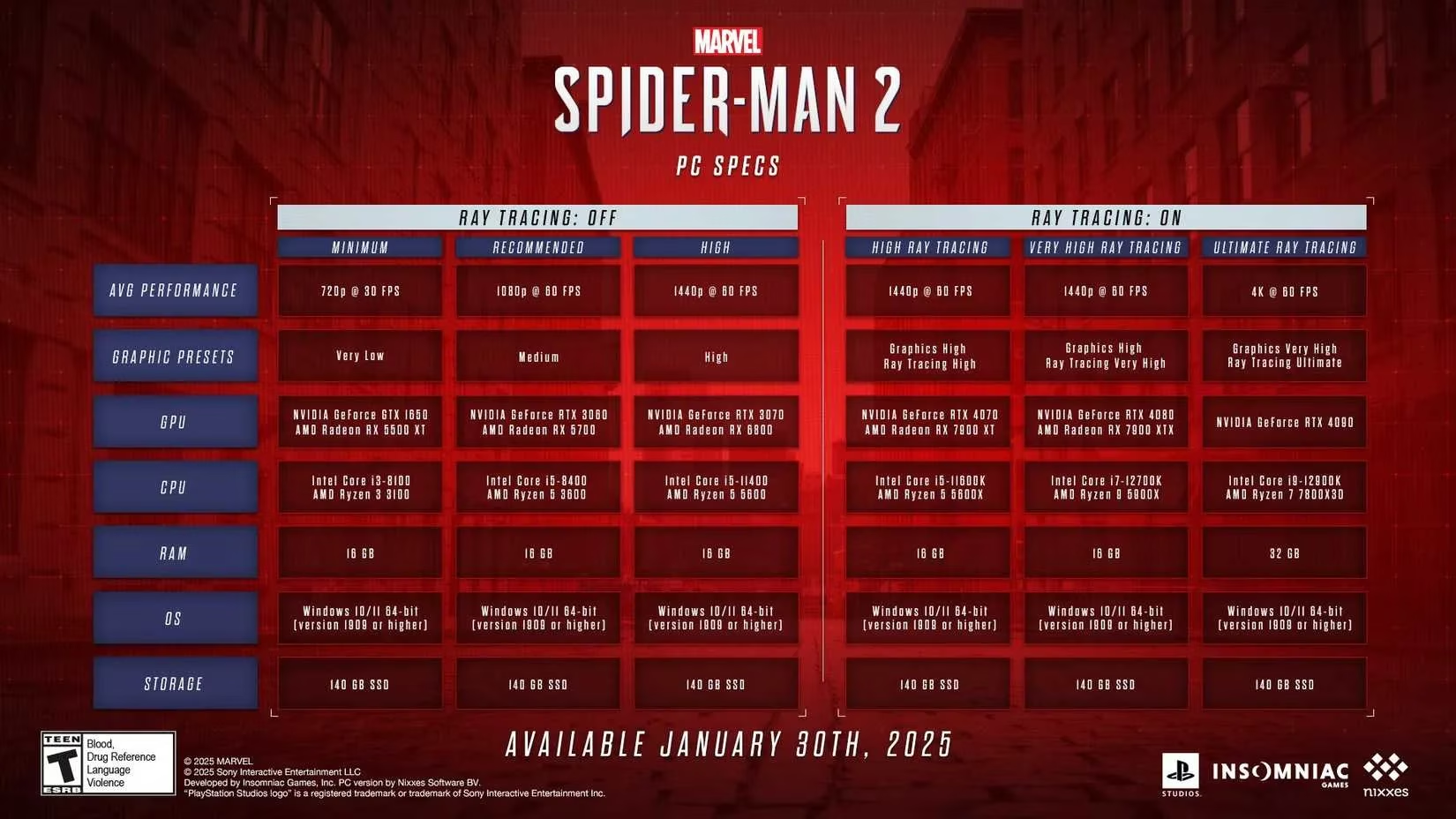
The headline addition is the ray tracing suite. The PC requirements list multiple ray tracing settings, which means players can scale the visual load rather than facing a single binary choice between off and maximum. Ray-traced shadows and ambient occlusion help ground the city's vertical spaces, while improved ray-traced reflections make glass towers, wet streets, and polished interiors feel more responsive to the world around them. In a game that constantly asks players to look down from great heights, reflections are not a minor detail; they are part of the spectacle.
| PC feature | What it adds |
|---|---|
| Upscaling and frame generation | Smoother motion and more flexible performance tuning |
| Ultrawide support | Panoramic views at 16:9, 21:9, and 32:9 |
| Ray-traced shadows and ambient occlusion | More grounded lighting in streets, rooftops, and interiors |
| Improved ray-traced reflections | Richer glass, water, and wet-surface detail |
| DualSense support | Haptic feedback and adaptive trigger integration |
The ultrawide support is especially fitting for a Spider-Man game. New York in Marvel's Spider-Man 2 is a character in its own right, and a 32:9 frame turns the skyline into a stage rather than a backdrop. The improved reflections are like the city's evening glow caught in a thousand panes of glass: subtle at first, then impossible to ignore once players start swinging through the financial district. These are the kinds of upgrades that do not rewrite the design, but they do change how the world is perceived.
The Same Web-Slinger, a Different Frame
The gameplay itself remains unchanged from the PlayStation 5 version. That is the correct decision. Marvel's Spider-Man 2 already built its identity around fast traversal, dual protagonists, and cinematic set pieces; the PC port's job is to preserve that rhythm while offering more graphical options. The result should feel like the same adventure viewed through a cleaner lens, not a different game wearing a familiar mask.
The critical reception around the original release was exceptionally warm. One review described the game as close to perfect, arguing that calling it merely the ideal Spider-Man game would undersell what Insomniac Games had achieved. That praise matters in the PC context because it sets a high bar: the port must protect the flow, responsiveness, and spectacle that made the console version land so well. Nixxes has not been asked to redesign the web; the studio has been asked to make sure it holds under a new set of tensions.
A Friendlier Launch Than Expected
One detail stands out for PC players: Sony does not require a PlayStation Network account to play Marvel's Spider-Man 2 on PC. That decision removed a common friction point for desktop users and made the release more welcoming from day one. It also reflected a broader lesson from earlier Sony PC ports, where account requirements sometimes overshadowed the games themselves.
For players discovering the title in 2026, the appeal is straightforward. The PC version offers the same acclaimed campaign, the same dual-protagonist chemistry, and the same sweeping vision of New York, now with ultrawide framing, upscaling, frame generation, and a layered ray tracing menu. It is a port that behaves like a second web-line: not a replacement for the first, but an additional path through the same city, strong enough to support the weight of the experience.",
"language": "en