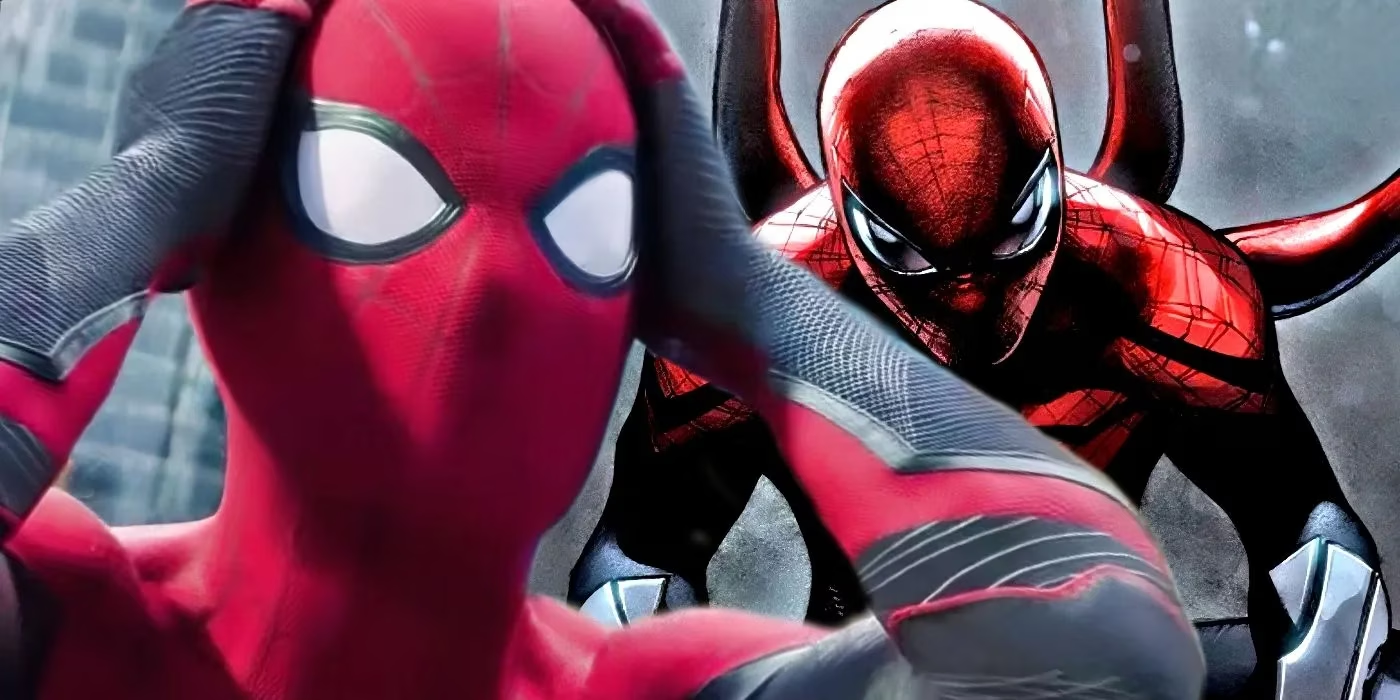
It’s a truth universally acknowledged that comics love a good fake-out death. But when Amazing Spider-Man #700 hit stands back in the day, even the most battle-hardened web-heads had to pick their jaws up off the floor. Peter Parker, the friendly neighborhood Spider-Man, was dead—not just grievously injured, not just trapped in another dimension, but room temperature and pushing up daisies. And if that wasn’t enough of a gut punch, the man cackling inside his skull was none other than Otto Octavius, Doctor Octopus himself, who’d swapped his failing body for Peter’s healthy one and declared himself the “Superior Spider-Man.” The fandom erupted. Tears were shed. Message boards melted. But behind the curtain, two very special people already knew the whole outrageous plot: Stan Lee and Andrew Garfield. Yes, the creator and the current big-screen Spidey were in on the secret quicker than you can say “Parker luck.”
In a delightfully candid moment at WonderCon 2025, writer Dan Slott—the mischievous architect of the Superior saga—spilled the radioactive beans. Picture the scene: Slott’s phone rings, and on the other end is none other than the legendary Stan Lee, that twinkle-eyed bard of the Bullpen. “Is Peter Parker really dead?” Stan asks, his voice probably a mix of grandfatherly concern and “I invented this kid, what the heck did you do?” Slott, ever the showman, simply replies, “No.” Just like that, one of the greatest secrets in modern comics was shared with the man who first dreamed up the wall-crawler. It’s like getting directions to buried treasure from the ghost of the pirate who buried it—absolutely surreal and totally fitting.
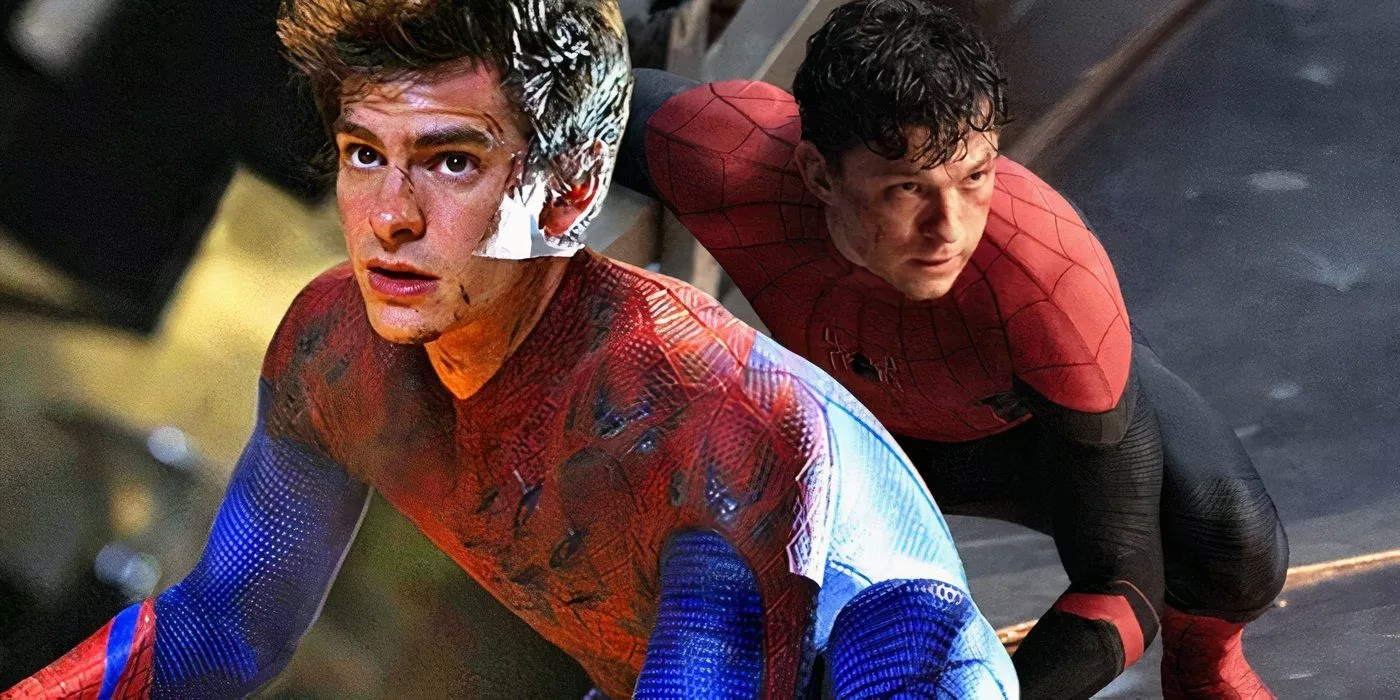
But wait, there’s more. Andrew Garfield, then swinging into production on The Amazing Spider-Man 2, corners Slott on set. The actor, whose Peter Parker had already been through the wringer in his own cinematic universe, fires off a wonderfully wounded quip: “So you killed me?” Slott, perhaps grinning like the Cheshire Cat, proceeds to break down the entire twisty, brain-swapping, ghost-lingering plot. And Garfield, with the razor-sharp wit of a man who’s used to dodging pumpkin bombs, fires back: “So I’m a ghost now?” That’s right—even the man who was Spider-Man got a personalized, spoiler-laden ghost story. One can only imagine Garfield practicing spectral floating between takes, muttering “great power” while haunting the craft services table.
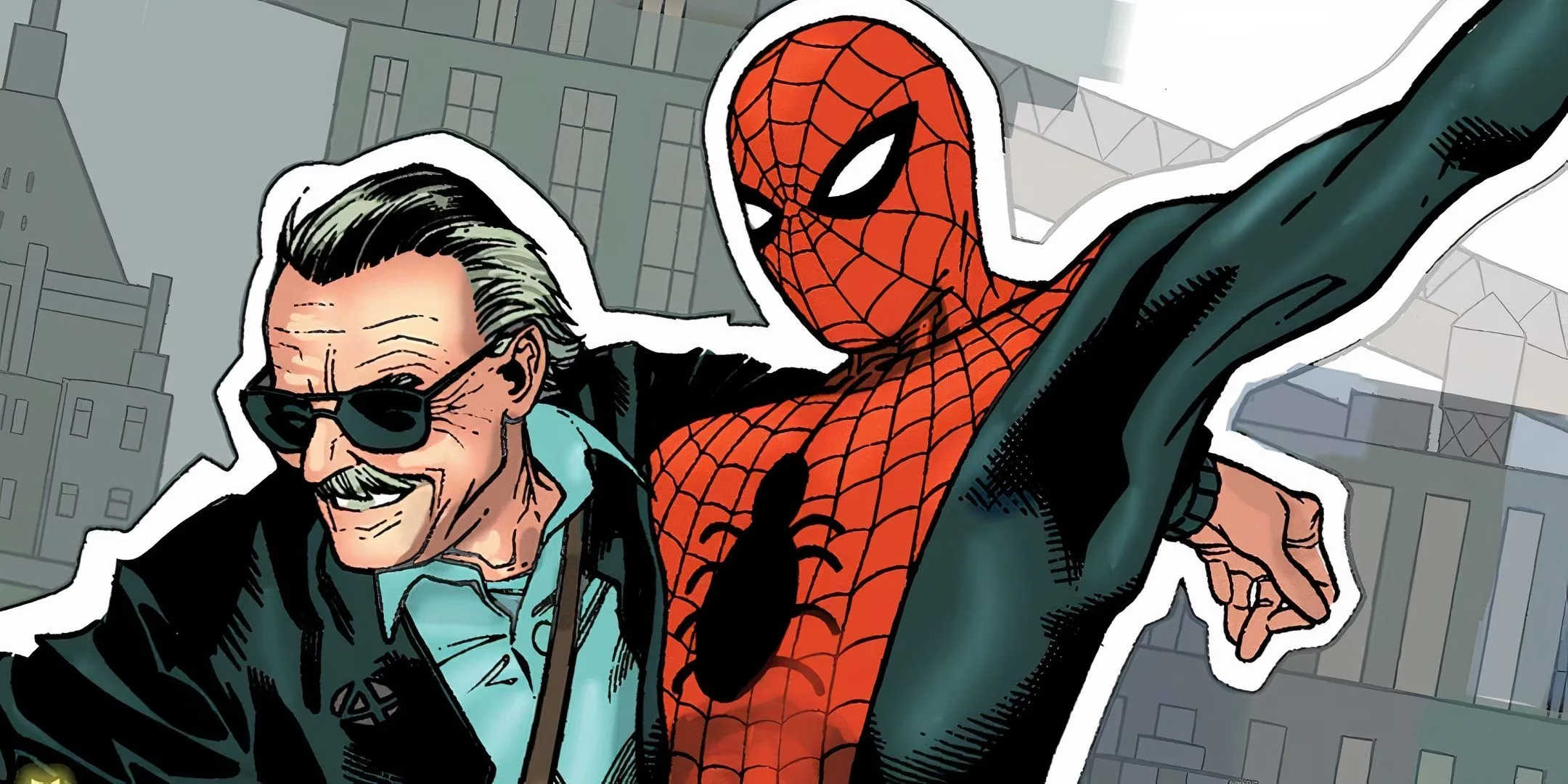
Now, you might be wondering: why would Slott, who notoriously told fans at conventions that Peter was “dead” and “not coming back” with a poker face of adamantium, blab the truth to these two? The answer is as heartwarming as a hot Aunt May wheatcake. Stan Lee, as Spider-Man’s co-creator, deserved a direct line to the fate of his creation—imagine building a house and then being told the new owner painted the walls inside-out without warning. And Andrew Garfield? He was the living, breathing embodiment of the character on the silver screen, pouring his soul into the role. Giving him the keys to the kingdom was an act of respect, a nod to his unique connection with the source material. After all, wouldn’t you want to know if your alter ego was currently a ghost riding shotgun in his own body?
Let’s break down the sheer audacity of the “Superior Spider-Man” era with a quick hit list of emotional whiplash:
-
🕷️ The Death: Peter’s consciousness fades in Doc Ock’s decaying body. Cue ugly-crying from every reader who’s ever worn Spider-Man pajamas.
-
🐙 The Takeover: Otto Octavius not only inherits Peter’s powers but his memories, his relationships, and even his taste for terrible pizza.
-
👻 The Ghost: A fragment of Peter Parker lingers like a guilt-ridden phantom, whispering what it truly means to be a hero.
-
🎭 The Redemption: Ock, experiencing the weight of "with great power comes great responsibility" firsthand, eventually steps aside and lets Peter retake control. It’s a villain-to-hero arc so satisfying you could serve it with whipped cream.
The real magic of Slott’s storytelling, though, wasn’t just the mind-bending premise. It was the fiercely protective love he had for the readers. While Stan and Andrew got the VIP backstage pass, the rest of us were strapped into the front car of the rollercoaster with no idea which way was up. Every twist, every tiny clue that Otto might be in over his many-armed head, every gut-wrenching memory echo—it was all an unspoiled gift. Slott played his audience like a maestro, feeding misdirection at panels while quietly crafting one of the most heartfelt returns in comic book history. He never compromised the journey, and in an age where spoilers fly faster than a speeding bullet, that’s downright heroic. There’s a sly lesson here, one that whispers louder than a Spidey-Sense: some secrets are better kept, especially when the payoff is Peter Parker busting through his own brain like a Kool-Aid Man on a mission.
At the end of the day, this little tale of insider knowledge says a lot about legacy. Stan Lee got to smile knowingly, Andrew Garfield got to riff about being a ghost, and fans got a story so intense it still sparks debates at comic shops years later. The Superior Spider-Man arc proved that a hero is more than a body, more than a name—it’s a responsibility that even a reformed supervillain can learn to carry. And if you ever run into Dan Slott, don’t bother asking for spoilers. As our friendly neighborhood writer might say with a wink: “Peter’s dead, and that’s final.” (Spoiler alert: it never is.)
So whether you’re a True Believer who was there for the original bombshell or a new reader cracking open the trade paperback, remember: the best stories are the ones that can still surprise you—even if, somewhere up in the great comic book rack in the sky, Stan Lee is chuckling about how he knew all along.